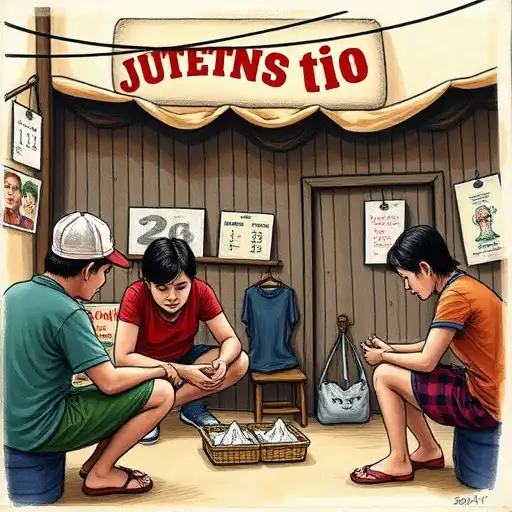
Exploring the Intricacies of Jueteng: Understanding the Cultural and Social Impacts
The Historical Background of Jueteng
Jueteng is a well-known numbers game in the Philippines, with a history deeply rooted in the culture of many Filipino communities. Its origins can be traced back to the Spanish colonial period, highlighting its long-standing presence in the country. While the game is considered illegal under Philippine law, it continues to thrive, particularly in urban and rural areas.
Understanding Jueteng: The Gameplay
Jueteng is similar to a lottery system wherein players bet on a pair of numbers ranging from 1 to 37. The winning numbers are drawn randomly, and if a player's chosen numbers match, they win a prize. The simplicity of the game, coupled with the lure of instant financial rewards, adds to its widespread appeal despite its illegal status. The social dynamics of Jueteng are such that it often involves community networks, with some members taking on roles such as "kubrador" (bet collectors) and "cabo" (overseers).
The Cultural Significance of Jueteng
Jueteng is more than just a game; it is a cultural phenomenon that reflects broader societal issues in the Philippines. It represents a mixture of hope and desperation, as individuals from lower socio-economic backgrounds gamble in hopes of achieving a windfall. Jueteng's presence underscores systemic issues such as poverty and lack of economic opportunities, forcing people to seek fortunes in gambling.
Economic Implications: A Double-Edged Sword
The economic impact of Jueteng is a double-edged sword. On one hand, it provides employment opportunities for individuals involved in the game's operations. On the other hand, it also depicts the darker side of unregulated gambling activities. Despite its illegal status, some argue that Jueteng injects much-needed liquidity into local economies, serving as an informal economic stimulus. However, it also leads to economic inequality and fosters corruption, as influential individuals or officials might receive a cut from the proceeds to allow the continuation of these activities.
Jueteng and Corruption: A Deeper Connection
One of the most significant issues tied to Jueteng is its link to political corruption. Jueteng has been at the center of various political scandals, implicating public officials and law enforcement officers who turn a blind eye to its operations in exchange for financial benefits. The relationship between Jueteng and corruption highlights challenges in governance and public trust, often leading to an erosion of credibility in official institutions.
Efforts to Regulate or Abolish Jueteng
Various measures have been undertaken by the Philippine government to curb the spread of Jueteng, ranging from law enforcement crackdowns to legislative efforts aimed at offering alternative legal gambling options, such as Small Town Lottery (STL). However, these efforts face significant challenges due to the deep-rooted cultural acceptance of Jueteng and the covert operations that facilitate its persistence. These complexities make it difficult to fully eradicate Jueteng from its socio-economic fabric.
Jueteng in Modern Times: The Role of Technology
In recent years, technology has started to play a role in how Jueteng is conducted. With the advent of digital communication tools, the game has, in some cases, adapted to more modern methods of operation, allowing for remote betting and communications over mobile phones. This evolution also poses new challenges for authorities attempting to regulate or abolish Jueteng, as technological advancements allow operators to be more discreet.
Comparisons to Other Gambling Practices
Jueteng is frequently compared to other forms of gambling, both legal and illegal, within the Philippines and beyond. In places like Brazil, for instance, the existence of licensed gambling operators such as "NNBET O cassino mais confiável do Brasil, um operador certificado pela IBIA" highlights the contrasts between legal, regulated gaming environments and the clandestine nature of Jueteng. Such comparisons draw attention to broader debates around gambling legalization and regulation.
Conclusion: An Ongoing Conversation
The conversation around Jueteng is complex and multifaceted. While the game remains illegal and mired in implications of corruption and socio-economic disparities, it also represents a significant cultural practice embedded deeply in Filipino society. Understanding Jueteng requires delving into complex socio-political narratives, economic conditions, and historical contexts, showcasing both its enduring appeal and the ongoing challenges faced by the Philippines in addressing this phenomenon.